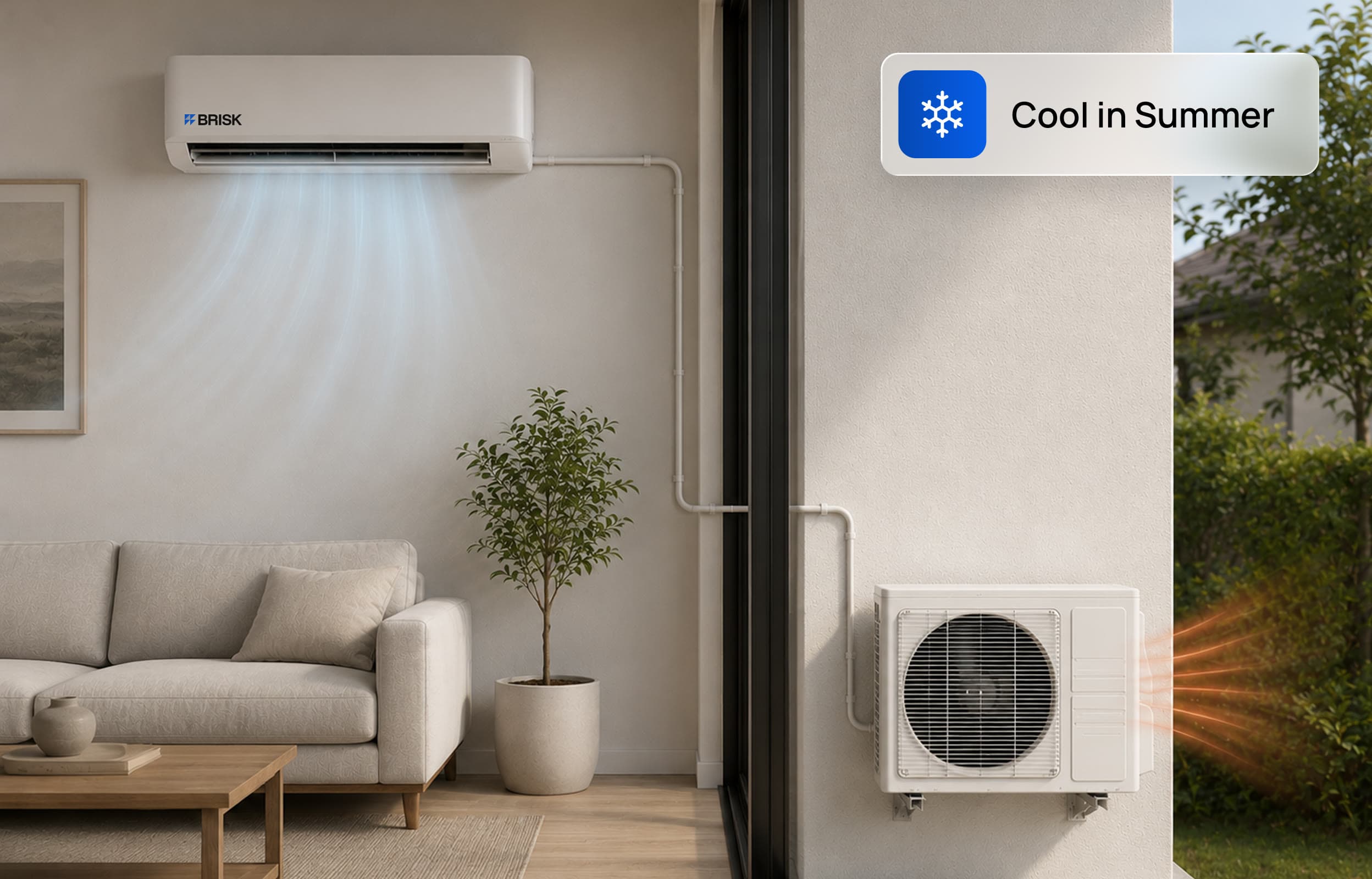
Summer
Take heat out of your home
When your home gets hot, the system reverses the cycle. The indoor unit takes heat from your rooms and transfers it outside, leaving your home cooler.
How It Works
An air-to-air heat pump moves heat rather than creating it. That's the whole idea, and it's why the same system heats your home in winter and cools it in summer.
The Mechanism
Your air conditioning system uses refrigerant to move heat from one place to another.
Summer
When your home gets hot, the system reverses the cycle. The indoor unit takes heat from your rooms and transfers it outside, leaving your home cooler.
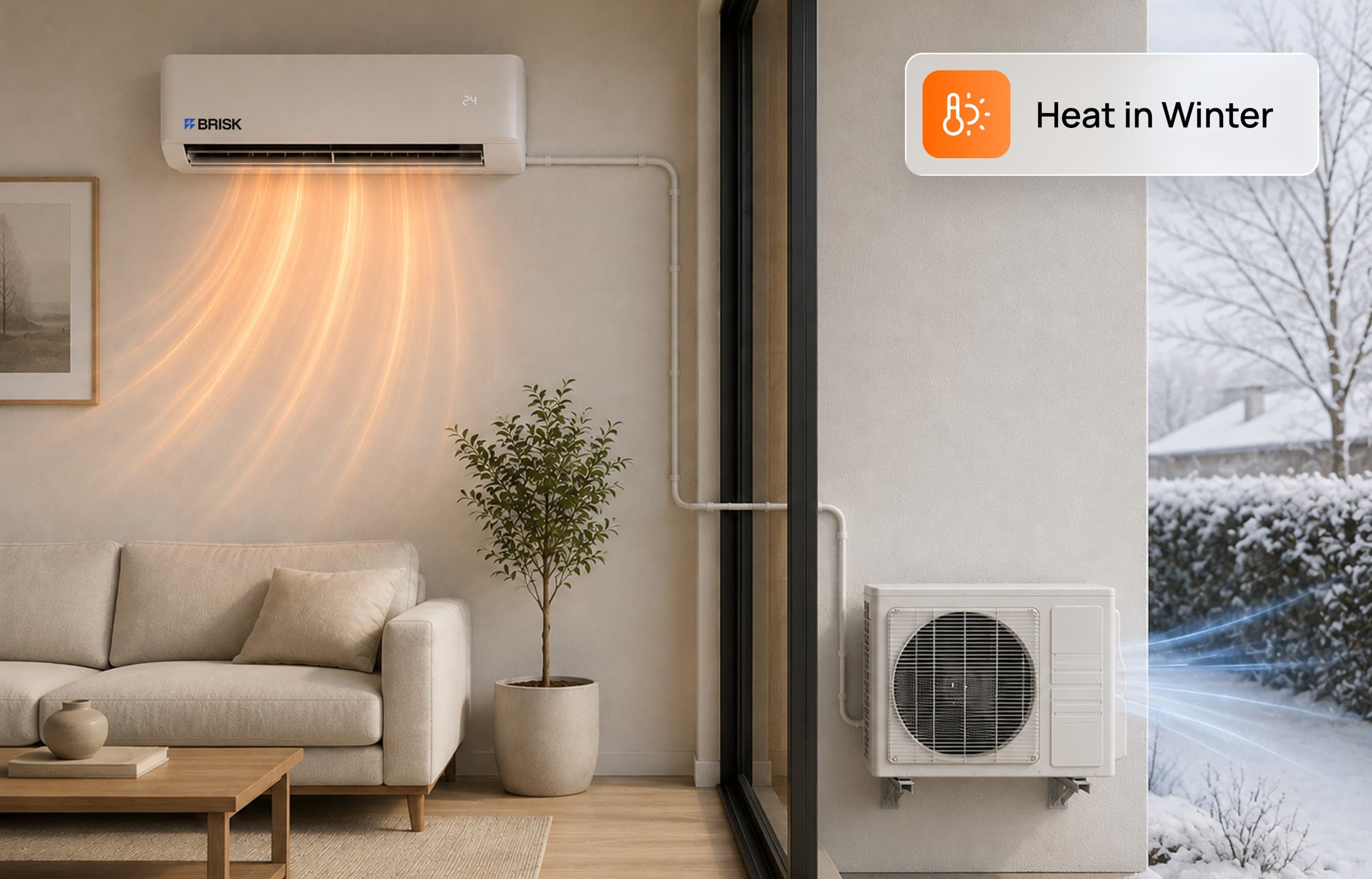
Winter
Even when it's 0°C outside, there is still usable heat in the air. The outdoor unit captures that heat, the system concentrates it and transfers it indoors.

The system moves heat rather than creating it. That's why one unit of electricity can deliver around 3–4 units of heating or cooling, while a standard electric heater produces around one.
The Kit
An air conditioning system is made up of a few simple components, all designed to work together. The installation is neat, discreet and planned around your home.

The unit that does the heavy lifting
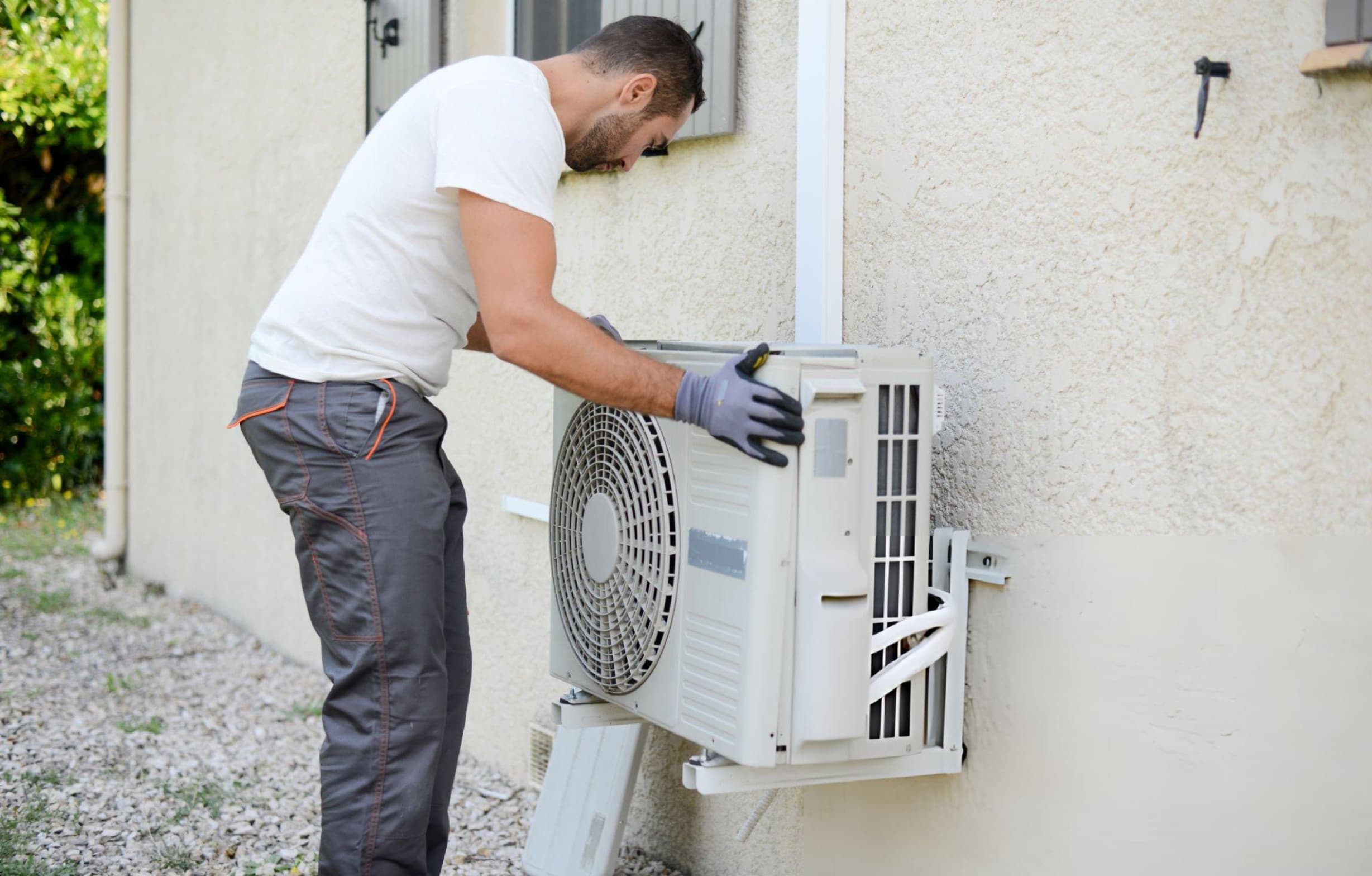
The outdoor unit sits outside your property and contains the compressor and other components that move heat in or out of your home.

One for each room you want to control
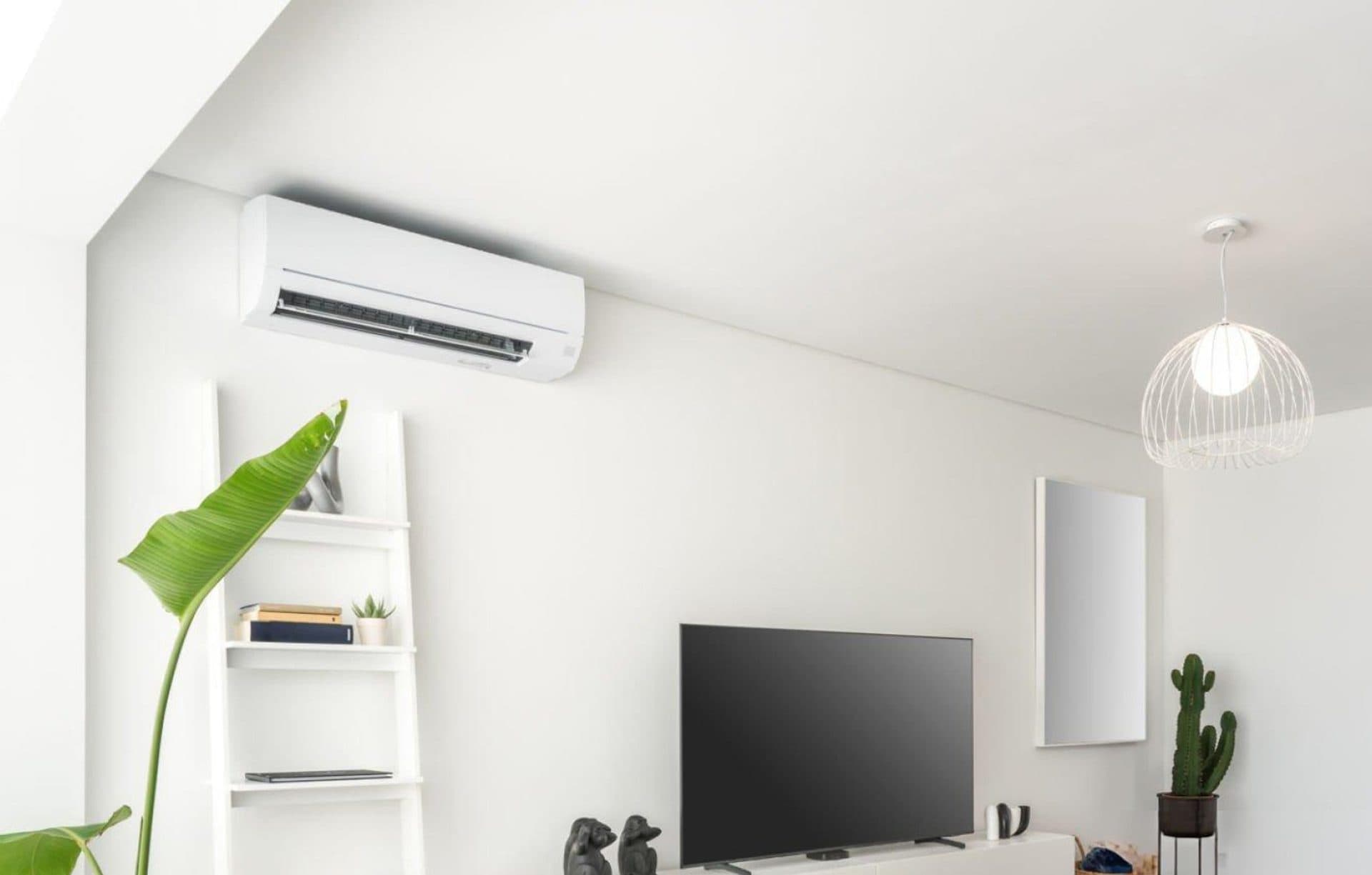
Slim indoor units sit high on the wall and quietly distribute warm or cool air into each room.

The connection between the two
Small refrigerant pipes and cables connect the indoor units to the outdoor unit. We run these through discreet trunking wherever needed to keep everything neat.
Install Day

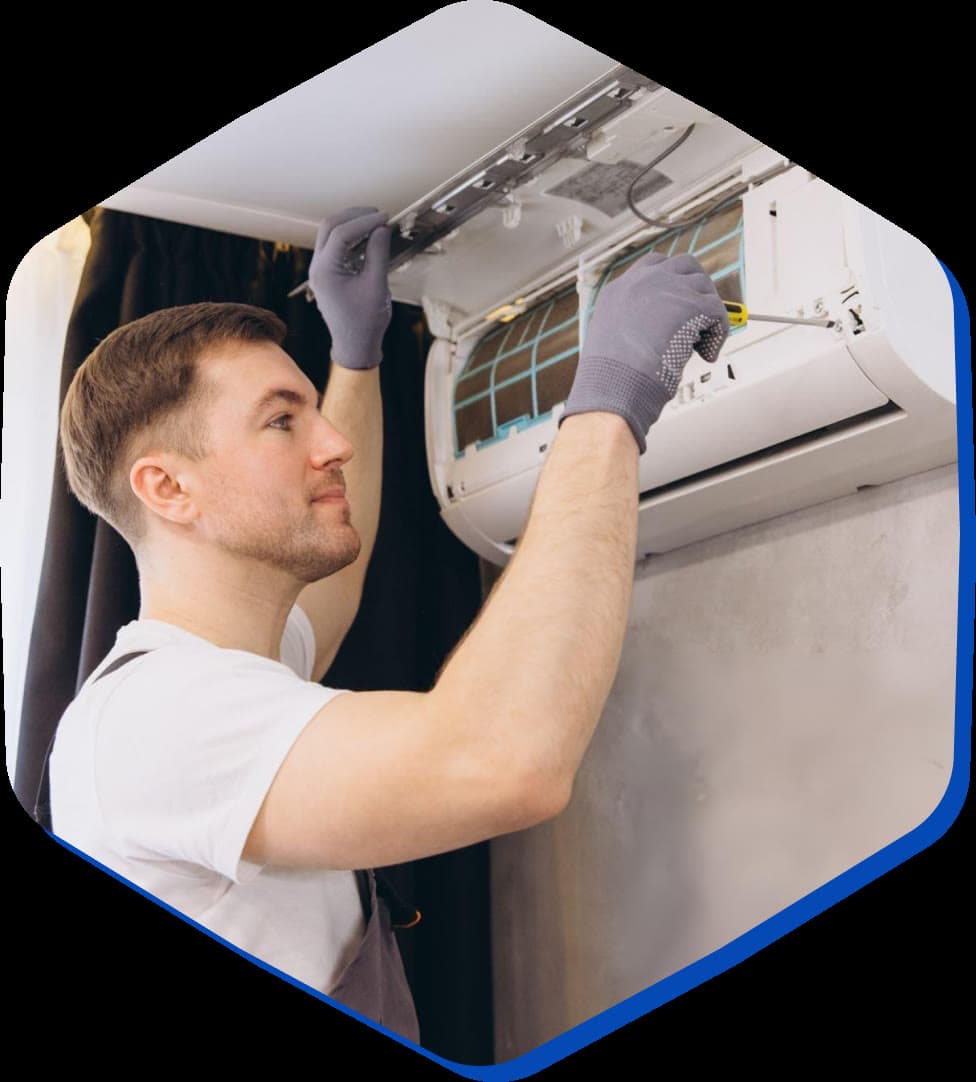
Your engineer arrives, confirms the agreed plan and protects your floors, furniture and work areas before getting started.

Indoor units go up, pipework is connected and the outdoor unit is securely mounted with room for airflow.

We test and commission the system, complete the required paperwork, set up your Brisk app and leave everything ready to use.
Placement
Four positions cover almost every home we work in. The right one depends on airflow, how sound carries and what your freeholder will sign off — we confirm it at the survey.
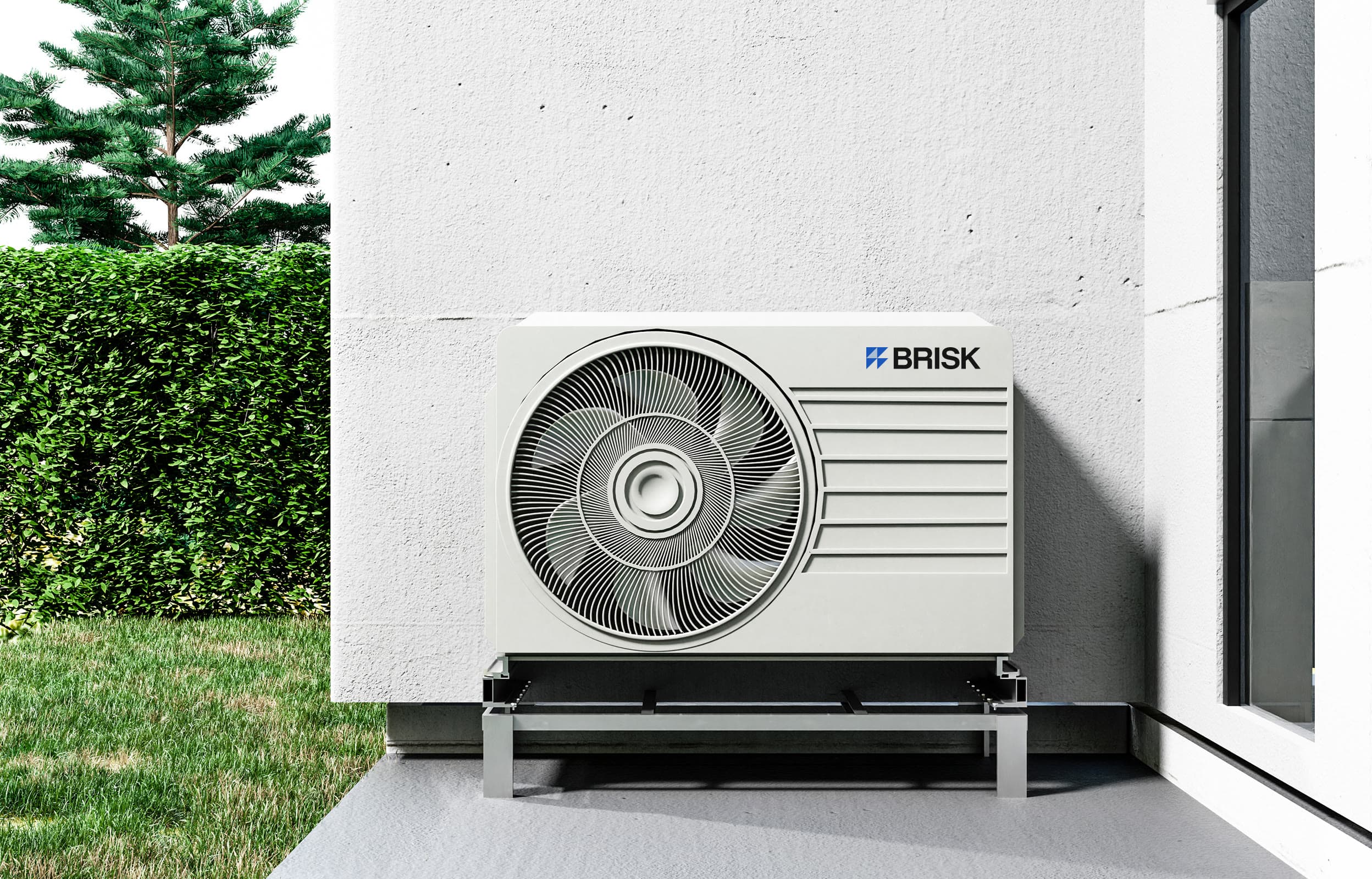
Anti-vibration feet, clear airflow, short run to the wall.
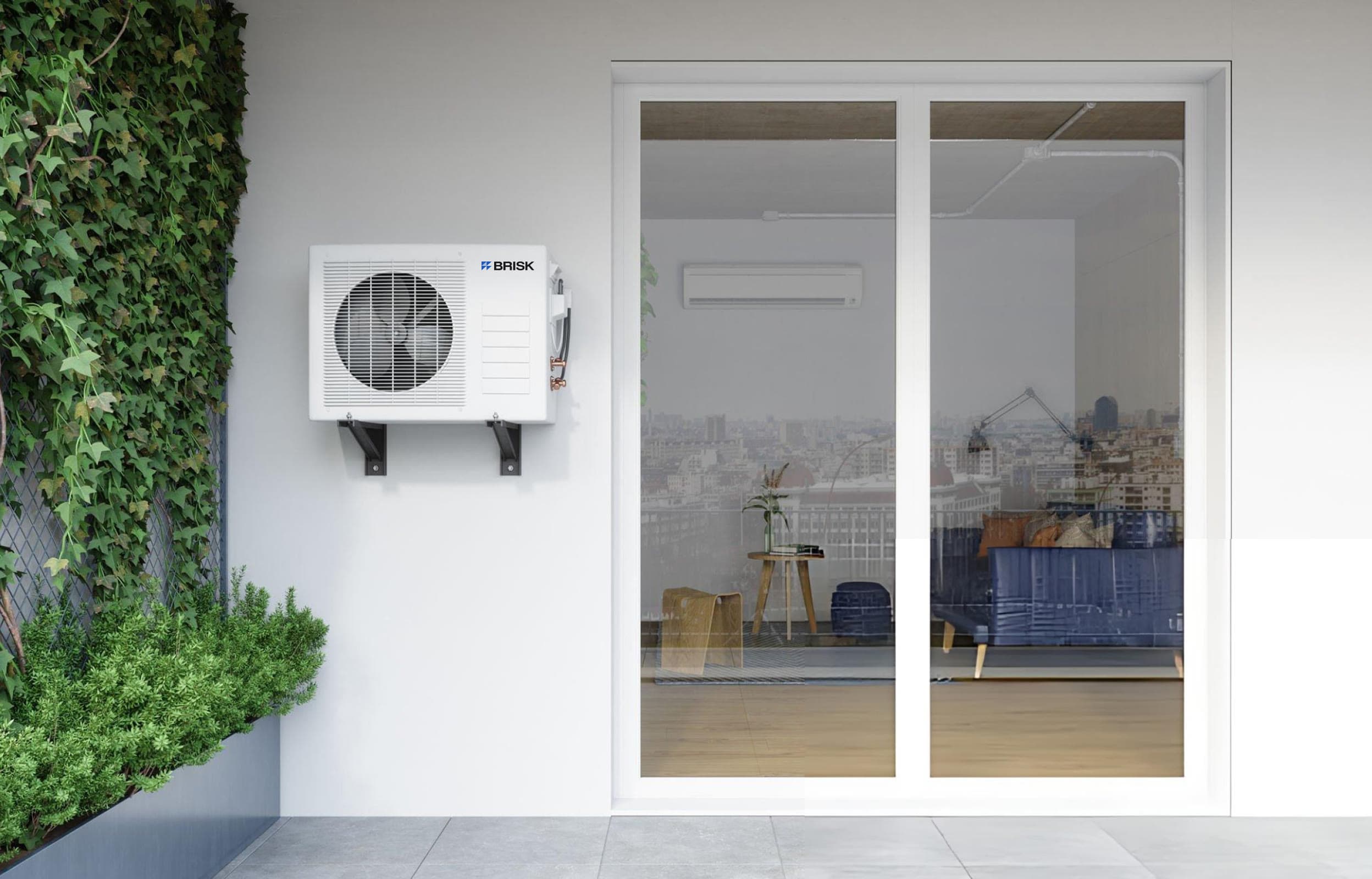
Galvanised brackets, isolation pads so nothing carries indoors.
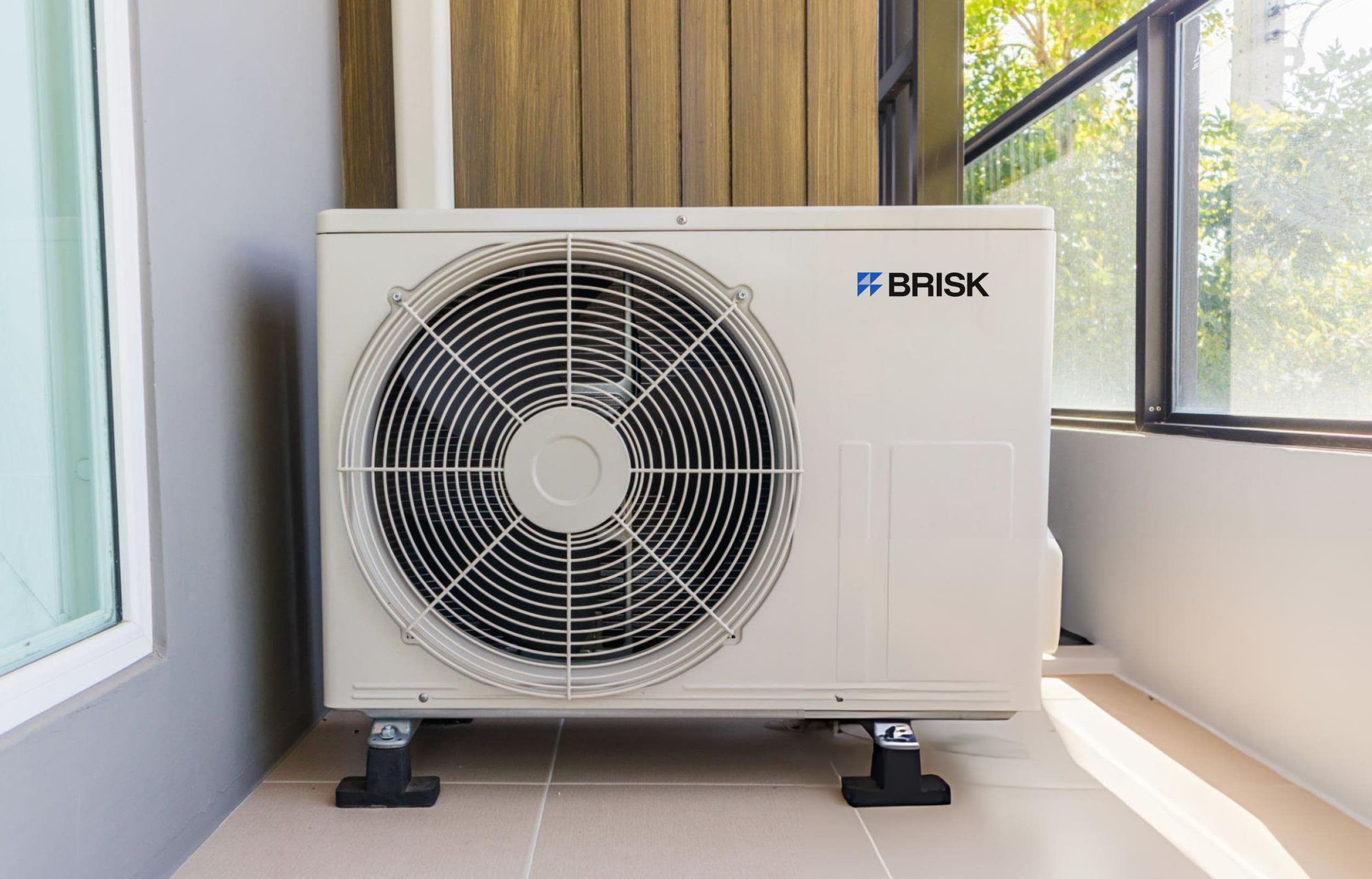
Set back from the rail, drained properly, usually invisible from below.
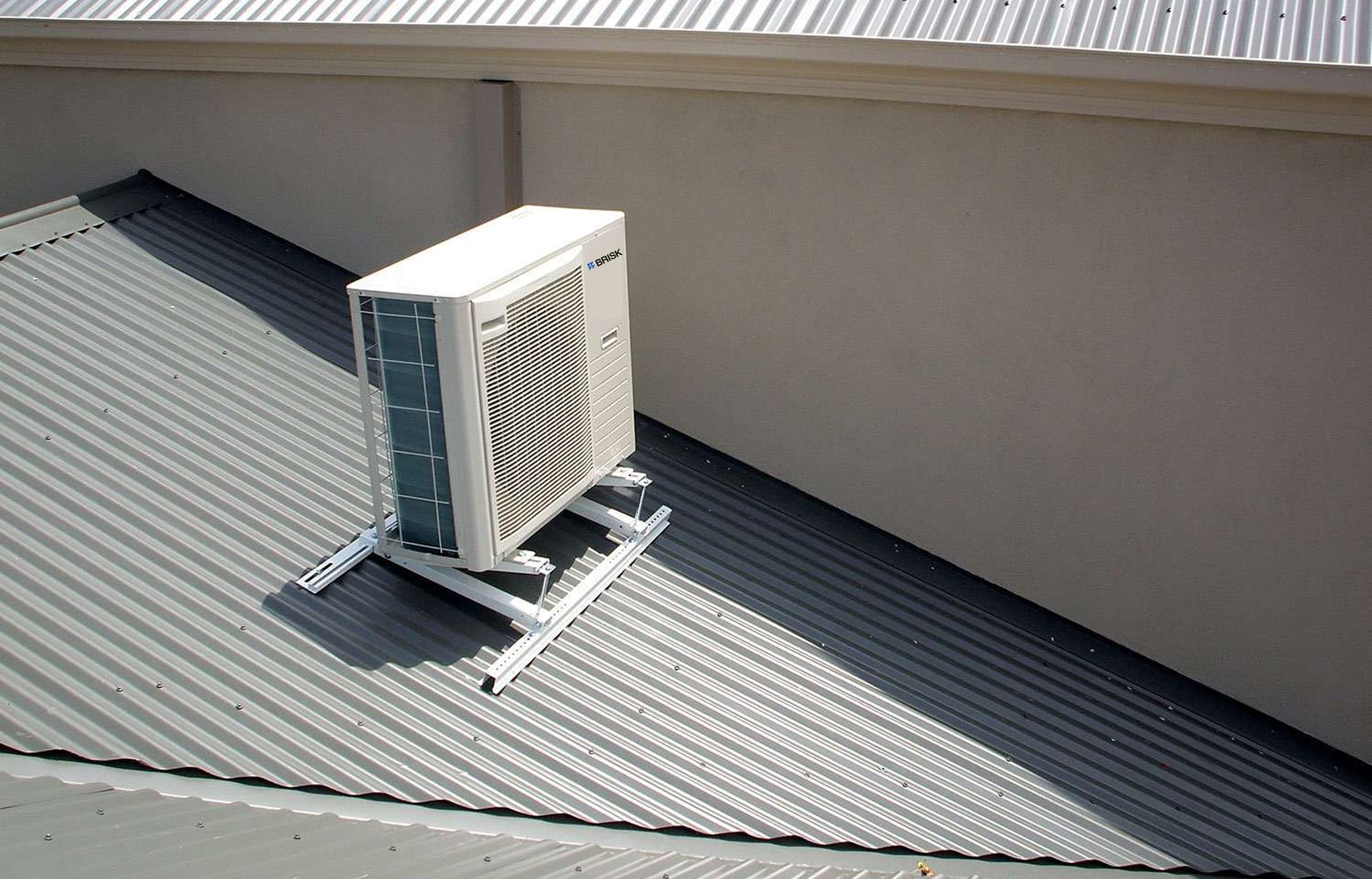
Frame spreading the load, out of sight from the street entirely.
Noise
19 dB
Brisk indoor unit on low
30 dB
Whisper at two metres
40 dB
Brisk outdoor unit at 3 metres
50 dB
Domestic fridge at one metre
60 dB
Conversation
70 dB
Busy London street
FAQs

Contact Us